
First Amendment Friday
April 24, 2026
The Theater That Said No
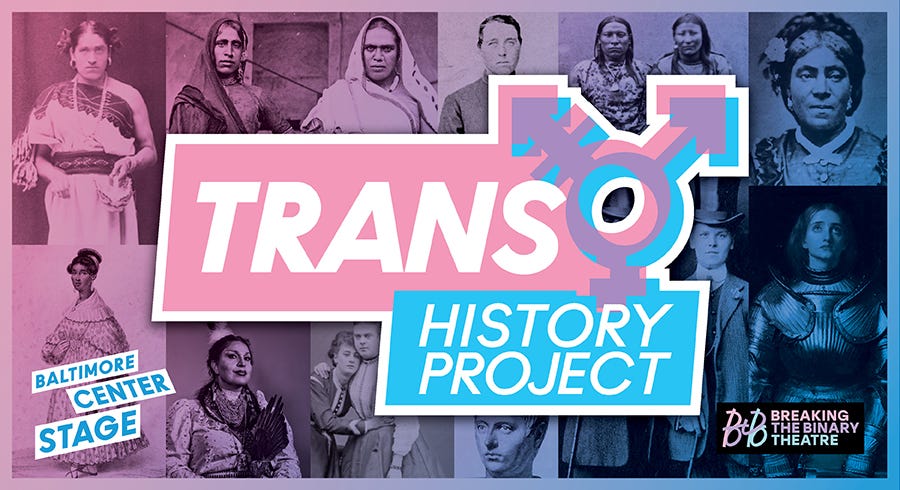
In 2025, the Trump administration made federal arts funding contingent on dropping diversity, equity, and inclusion programming. For most arts organizations, this was a budget crisis. For Baltimore Center Stage, the official state theater of Maryland, it was a test they decided to fail on purpose.
A year later, they’re still failing that test, only harder. Producing director Ken-Matt Martin told Baltimore Banner columnist Leslie Gray Streeter that the theater’s response to the federal pressure has gone from doubling down to what he called, laughing, “maybe it’s a triple-down.” thebanner
Baltimore Center Stage’s 2025–26 season included Trinity, a Lena Waithe play featuring a Black lesbian love triangle, and The Peculiar Patriot, Liza Jessie Peterson’s work about the racist roots of the American prison system. The 2026–27 season includes works by Laura Benanti, Bess Wohl, August Wilson, and Xtravaganza, a theatrical spectacle about LGBTQIA+ Black and Latino dancers in New York’s underground ballroom scene.
Under the administration’s new guidelines, Martin said, “the rules for federal funding are so strict that we would not qualify, because of who we are. Shows like Xtravaganza would not exist in that world.” So they gave up the NEA money. Even before Trump’s executive order, grants to the theater had declined from the $50,000–$70,000 range to $25,000–$30,000. Center Stage replaced the shortfall with support from the Mellon and Ford Foundations, state and city funding, and private donors. thebanner
The First Amendment prohibits the government from using funding to coerce speech it favors or suppress speech it doesn’t. Rust v. Sullivan (1991) and NEA v. Finley (1998) both probed this territory. The line between a legitimate funding decision and an unconstitutional condition runs through viewpoint discrimination. When federal criteria exclude programming because it centers Black, queer, or otherwise marginalized voices, categories defined by viewpoint and identity rather than artistic quality, the condition stops being about what the government funds and starts being about what the government permits.
Artistic director Stevie Walker-Webb put the civic logic plainly: “If you don’t fight for the people in groups that you’re not in, you’re next.” Maryland poet laureate Lady Brion, who will star in the theater’s King Hedley II, said she has already lost opportunities with organizations that stopped producing diverse work to save their budgets. The chilling effect is not hypothetical. thebanner
This is the inverse of what’s been happening at the Smithsonian and the Kennedy Center, where institutional compliance has pushed exhibitions, performances, and artists out of federal venues and into independent ones. Baltimore has been one of the beneficiaries.
The through-line is simple. When the federal government conditions funding on suppressing disfavored speech, institutions either comply or refuse. Most comply. Center Stage refused and has demonstrated that artistic freedom is something you either practice or lose.
“We are artists who are genuinely invested in what diversity, equity, and inclusion means,” Martin said. “They’ve become dirty words. Intentionally, I don’t use the full acronym. I use the full words. Let’s talk about it.”
The Greene County Poet Laureate
In January, Greene County, New York, named Esther Cohen, a longtime writer, award-winning poetry teacher, and 40-year resident of the Catskills, as its first poet laureate. This month, the chairman of the Republican-majority county legislature rescinded the appointment, citing two of Cohen’s Facebook posts that lawmakers said appeared to celebrate the prospect of President Donald Trump’s death. theoverlooknews
Cohen removed the posts, apologized, and said she doesn’t advocate violence. “I was chosen for my poems, not my politics,” she told The Overlook. The legislature declined her offer to speak with them. CREATE Council on the Arts, which administers the selection, reportedly does not plan to name another candidate. The $1,000 honorarium Cohen received in February may be rescinded since she hadn’t cashed the check yet.
The First Amendment question here is not whether Cohen’s posts were in good taste. It’s whether a local government can revoke a cultural appointment based on a citizen’s lawful political speech on social media. Republican legislator Michael Lanuto Jr. also cited Cohen’s posts supporting New York City Mayor Zohran Mamdani as disqualifying, which moves the rationale from “promotion of violence” to plain viewpoint screening.
Cohen’s most recent book, All of Us, is a portrait of her Greene County neighbors. She has taught writing in supermarkets, laundromats, and low-income senior housing. The position she won’t hold was meant, per CREATE, to bring poetry to unexpected places. It found one.
Tell Me
my new hypnotist said
(maybe hypnosis
will help me sleep)
tell me about your mother.
We only have an hour
I replied
and we both laughed
went on
to easier subjects :
childhood education
middle age work
anything is easier
than describing your mother
even in a poem
by Esther Cohen
Letter from Lebanon
My friend Mo writes from Beirut on April 14th, “It’s Happening Again”
Those who choose to see will see.
They will see what is happening.
They will see the occupation and colonial settlement.
They will see the militarization.
They will see the concentration of profit.
They will see the dismantling of our political practice.
When things become this visible, our positioning can no longer be a matter of political opinion; it becomes one of personal and collective responsibility.
For me, art and culture are acts of personal and collective responsibility, grounded in political determination. They are neither a refuge nor a consolation.
Art is a tool to question power, expose injustice, and refuse submission to systems that devalue human life. When war seeks to dictate what is possible, artistic practice insists on the opposite: it creates spaces for critique, solidarity, and the imagination of alternatives.
Art makes visible what power tries to erase.
This is why I do what I do.
Please read his full Letter from the Ground
The Public Library is the First Amendment in Practice
Next week is National Library Week, and the American Library Association marked it by releasing its annual list of the books most challenged in 2025. Patricia McCormick’s Sold topped the list. The ALA’s Office for Intellectual Freedom recorded challenges to 4,235 different works, the second-highest total since they began tracking more than 30 years ago. More than 90 percent of those challenges came from organized activists and government officials, not concerned parents. The suppression is coordinated, well-funded, and politically driven. APNews
The United States has roughly 9,000 public library systems operating more than 17,000 outlets — main branches, neighborhood branches, and bookmobiles. Approximately 97 percent of Americans live within a public library service area. In 2017, more than 172 million registered users visited public libraries 1.32 billion times, and libraries hosted 5.6 million programs attended by over 118 million people. That’s more annual attendance than every professional sports league in the country combined, many times over. Institute of Museum and Library Services
But the numbers only gesture at what libraries do. They are the last genuinely public indoor space in most American communities — nothing to buy, no time limit, no implication that you’ve overstayed your welcome. They are where children learn to read, where immigrants study for citizenship exams, where job seekers print resumes, where the unhoused find shelter from heat or cold, where researchers access databases they couldn’t otherwise afford, and where seniors learn to use a smartphone. They are where people without broadband go to apply for benefits, file taxes, and fill out the forms that modern life requires. They are one of the few remaining institutions that treat every person who walks through the door as equally entitled to be there.
The First Amendment guarantees free speech and free exercise, but it also protects something quieter and equally fundamental — the right to receive information, as established by the Supreme Court (see below: CDC Suppresses Its Own Science). Board of Education v. Pico (1982) holds that school officials cannot remove books from library shelves simply because they disagree with the ideas inside them. The case recognized libraries as places where the First Amendment’s promise becomes concrete: a citizen’s right to read, to inquire, to encounter ideas the government would prefer they not encounter.
A coordinated campaign to remove books from library shelves — disseminating national target lists, pressuring librarians, passing state laws that criminalize what was previously protected is a direct challenge to the constitutional principle that what citizens can know is not the government’s to decide.
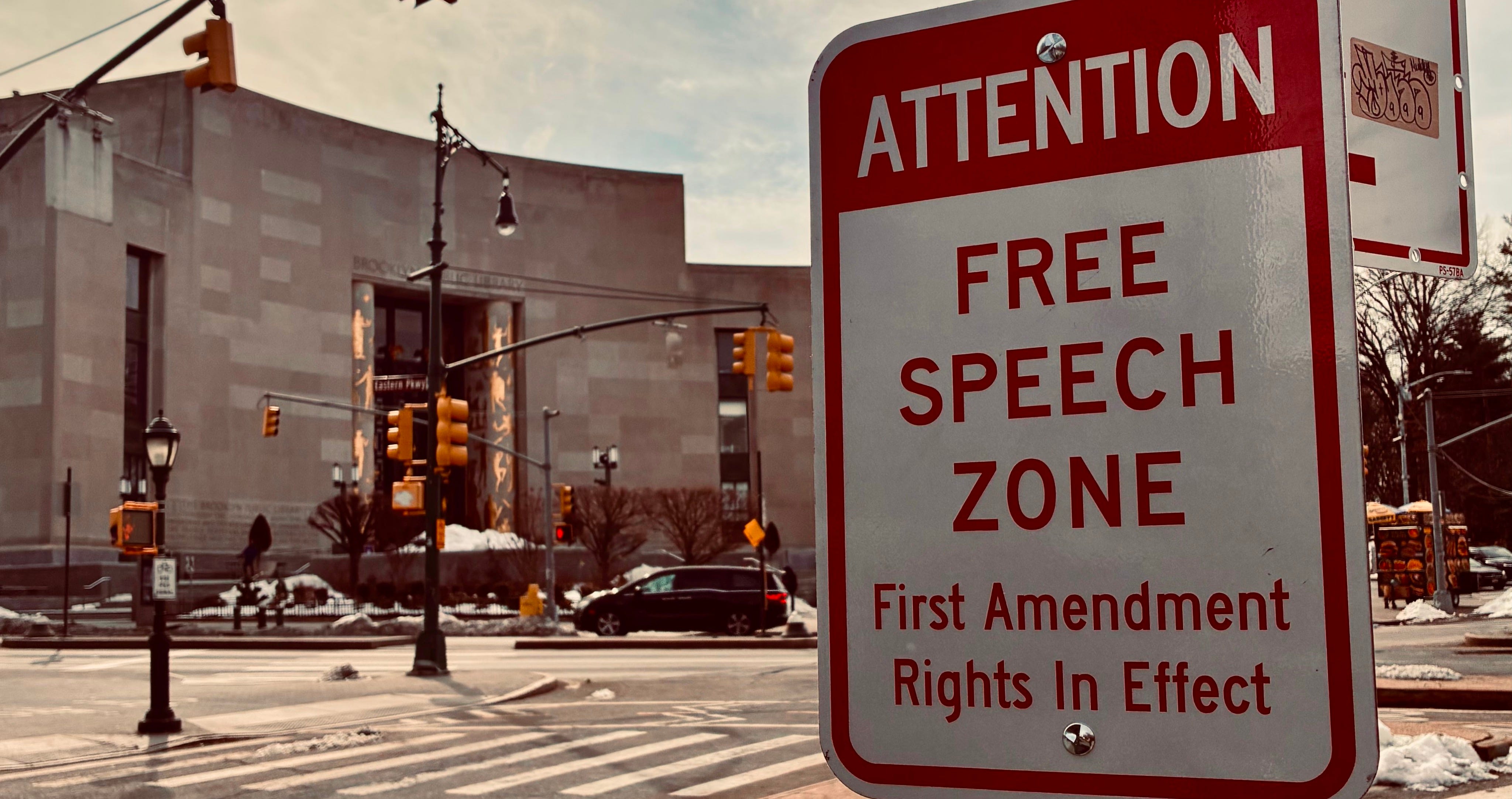
At a recent visit to the Brooklyn Public Library, I was surprised to learn that they host regular walk-in hours with a social worker. Every Thursday from 10 a.m. to 3 p.m. at Central Library, anyone can meet with a social worker — no appointment, no cost — for referrals on housing, food, employment, health insurance, and mental health. Appointments are thirty minutes. You just show up. Brooklyn Public Library
That is what the First Amendment looks like when it actually reaches the ground. Not an abstract principle, but a room where someone in need can walk in, be treated as a full citizen, and leave with information they couldn’t have gotten elsewhere. The library is the promise made practical, which is exactly why the campaign to diminish it should worry anyone who believes that promise still matters.
The CDC Suppresses Its Own Science
The Washington Post reported this week that the CDC (Centers for Disease Control and Prevention) has blocked publication of a report showing last winter’s COVID-19 vaccine reduced emergency department visits and hospitalizations among healthy adults by about half. The report had been scheduled to run March 19 in the Morbidity and Mortality Weekly Report(MMWR), the CDC’s flagship scientific journal, continuously published since 1952. It won’t run at all.
This is a First Amendment story, even though it doesn’t look like one at first glance.
The blocked report cleared the agency’s full scientific-review process, which involves dozens of scientists. Acting CDC Director Jay Bhattacharya first delayed it, then rejected it, citing concerns about the test-negative methodology the CDC has used for years to evaluate respiratory vaccine effectiveness. A flu vaccine effectiveness report using the same methodology was published in the MMWR a week earlier.
Michael Iademarco, who oversaw the MMWR from 2014 to 2022, told the Post he could not recall the CDC stopping an MMWR report in the publication phase after scientific clearance and editorial review. The CDC pulling a cleared paper is extraordinary.
The First Amendment protects a right to receive information, not just to speak as established in Lamont v. Postmaster General (which attempted to prevent receipt by mail of “communist” material), Stanley v. Georgia (a case that protected the right to own “obscene” materials), and Board of Education v. Pico (preventing a local school board from removing books including thos by Richard Wright and Kurt Vonnegut from a school library).
Democratic self-government and individual decision-making both require access to information. When a political appointee overrides the agency’s own scientific-review process to prevent publication of findings that contradict the administration’s policy posture, the public record is being shaped not by scientific judgment but by political convenience.
Clinicians use the MMWR to make treatment decisions. Parents and patients rely on it to understand what works. The methodological pretext collapses the moment you notice the flu study used the same methods the week before. The three sources who spoke to the Post did so on the condition of anonymity for fear of retaliation. That’s a good indication of what is happening inside government agencies right now.
In August 2025, CDC Director Susan Monarez was removed less than a month into her tenure after she refused to rubber-stamp unscientific, reckless directives and fire dedicated health experts. Four senior officials resigned within hours. Chief Medical Officer Debra Houry called it “a bat signal.” An earlier CDC analysis of thimerosal was briefly posted before being taken down at HHS’s direction. A government scientist watching this has every reason to ask whether rigorous work on a politically inconvenient topic is worth the professional risk. CBS News
This story exists because people inside the CDC took a risk, and because the Washington Post had reporters to follow it. The First Amendment protects both the leakers’ speech and the press’s publication, and together they are the reason the suppression became visible at all. The report itself won’t be published. The fact of its suppression now is. That’s the system working under strain, not working smoothly.
The Joke That Built a Presidency
This Saturday, the White House Correspondents’ Association will hold its annual dinner in Washington. President Trump will attend — his first appearance at the event as a sitting president, after boycotting it every other year because, as he put it, the press was extraordinarily bad to him.
The dinner is a peculiar American institution. It began in 1920, and since 1983, it has traditionally featured a stand-up comic whose job is to deliver a roast with the president of the United States sitting at the head table, sometimes three feet away. The premise is simple and unusual in the history of nations: the person with the most power in the room is supposed to sit there and take it. Al Franken did it twice in the Clinton years. Rich Little did Reagan. In 2006, Stephen Colbert mercilessly dissected President George W. Bush’s Iraq war policies onstage as Bush listened close by.
This isn’t a sideshow. It is a small annual ritual of what the First Amendment actually means in practice — the right to mock the powerful, in their presence, without arrest, without consequence, without apology. The amendment protects speech not because mockery is nice but because kings once jailed people for less, and the Framers understood that a government immune from ridicule is a government on its way to being immune from everything.
On April 30, 2011, President Obama delivered a set of remarks at the dinner with Donald Trump sitting in the audience. Trump had spent weeks fanning the birther conspiracy, demanding Obama release his birth certificate. Obama leaned in. Seth Meyers followed with a string of jokes mocking Trump’s hair, his television show, and his fixation on the birther movement. Trump’s longtime adviser, Roger Stone, later told PBS’s Frontline: “I think that is the night he resolves to run for president. I think that he is kind of motivated by it.” Author Michael D’Antonio put it more bluntly: “This is a burning, personal need that he has to redeem himself from being humiliated by the first black president.” PBS
A coalition of more than 250 former broadcast journalists and media organizations, including the National Association of Black Journalists and the Society of Professional Journalists, has asked the WHCA to make a statement about the administration’s attacks on the press when it hosts Trump on Saturday. Federal agents arrested Black journalists Don Lemon and Georgia Fort covering a news event in 2026 — two federal judges refused to sign arrest warrants for lack of evidence before the Justice Department obtained a grand jury indictment. Mario Guevara, an Emmy-winning Spanish-language journalist, was deported after being arrested covering a No Kings rally. This year’s dinner will not feature a comedian.
When “Universal” Gets a Footnote
The Supreme Court announced this week that it will hear St. Mary Catholic Parish v. Roy, a case asking whether Colorado can keep Catholic preschools out of its universal pre-K program when those schools won’t enroll children of same-sex parents. Argument is expected in the fall. The case is a Free Exercise Clause case — the First Amendment question is what religious liberty requires when a faith-based institution participates in a public benefit program whose rules it doesn’t want to follow.
Colorado’s program, approved by ballot in 2020, gives every family 15 hours of free preschool a week at the public or private provider of their choice — a benefit worth about $6,000 per child. Participating schools must agree not to discriminate based on race, religion, sexual orientation, gender identity, income, or disability. The Archdiocese of Denver, which runs 34 preschools, requested a religious accommodation. Colorado’s Department of Early Childhood said no. A federal district court and the Tenth Circuit both sided with the state. The Tenth Circuit called Colorado’s program a “model example of maintaining neutral and generally applicable nondiscrimination laws while nonetheless trying to accommodate the exercise of religious beliefs.” CBS News
The First Amendment precedent in the crosshairs. The case targets Employment Division v. Smith (1990), the foundational Free Exercise ruling holding that neutral, generally applicable laws don’t require religious exemptions even when they burden religious practice. Smith has been controversial on the religious right for decades. Justices Thomas, Alito, and Gorsuch have already said it should be overruled. The Court declined to take up that question directly but agreed to consider narrowing the precedent — a move the Trump administration asked for in an unusual, unsolicited amicus brief filed in January, given the federal government is not a party. The Hill
The archdiocese says Colorado’s rule isn’t truly generally applicable because the program permits other preferences — schools can prioritize low-income children or those with disabilities. Those carveouts, the argument goes, take the law outside Smith‘s protection, trigger strict scrutiny, and require a religious exemption. Colorado responds that the nondiscrimination provision itself contains no exemptions, and that accommodations for poverty and disability aren’t comparable to an exemption permitting exclusion of children because of who their parents are.
The Free Exercise Clause protects the right to practice one’s religion free from government coercion. The harder question, which the Court has been working through case by case, is what happens when religious institutions seek access to government programs on terms that exempt them from the rules other participants must follow. The Espinoza v. Montana Department of Revenue (2020) and Carson v. Makin (2022) rulings established that states can’t exclude religious schools from public funding because they’re religious. The current case asks the next question: can states condition funding on compliance with anti-discrimination rules that religious institutions say violate their beliefs?
Elmo Said Habibi
In honor of Arab American Heritage Month, Sesame Street posted a 41-second clip on April 16 in which comedian Ramy Youssef taught Elmo these Arabic words: salamu alaykum (”peace be upon you”) and habibi (”my love”). Elmo hugged Youssef. The internet lost its mind.
Fox News contributor Raymond Arroyo warned on The Ingraham Angle that “Next, Bert and Ernie will be praying five times a day on Sesame Street, facing east.” Sesame Street has featured Spanish, French, Japanese, Mandarin, and sign language for over five decades without incident. Elmo saying habibi broke the brain of cable news. Variety
Youssef, appearing on The View, noted a minor inconsistency. “I feel for them, right? I think they’re worried about Arabic immersion, and it’s got to be tough, because I think they’re supporters of the President. So imagine your president on Easter is tweeting ‘Praise be to Allah,’ and now Elmo saying ‘habibi’ feels threatening,” he said — referencing Trump’s April 5 social media post about the Iran conflict. Raw Story
The First Amendment protects a children’s show teaching a four-year-old that habibi means “my love.” That this even needs saying is the news. That Elmo said it anyway is the good news.
UPCOMING EVENTS
UNDOXX Artist Hub!
April 29, 2026 | 6:30-9:30pm ET
BAX Annex | 80 Hanson Place, Ground Floor, Brooklyn
Free with RSVP at Event Link
Join a conversation with performance artist Karen Finley, FACT co-founder George Emilio Sanchez, and Shirine Saad on arts censorship since the 1990s, and what we can learn from artist-activists who have long refused to be silenced.
Acknowledgement
We are always grateful for the encouragement and suggestions of our colleagues and peers.
NEXT STEPS: TAKE ACTION
First Amendment Friday
F.A.C.T. invites all cultural institutions, artists, and activists to post First Amendment stories, graphics, calls to action, and advice to their audience every Friday. Join our campaign by signing up here. Feel free to use our digital assets here.
Public Practice
We are asking cultural venues in New York City (and across the USA) to prominently place our First Amendment poster in their public areas. Sign up to get your copy. We are also asking performance venues to share our curtain speech (or create your own).