
First Amendment Friday
March 27, 2026
This Saturday: No Kings
This Saturday, March 28, the No Kings movement returns for what organizers believe will be the largest single-day protest in American history. Many FACT members will be joining the protest in NYC. Join us.
The first No Kings rally in June 2025 drew an estimated 5 million people across more than 2,000 protests. By October, that grew to roughly 7 million across 2,700 events.Over 3,000 protests are now scheduled for Saturday, with organizers guided by the “3.5% rule” of nonviolent social change, the research-backed threshold at which sustained mass movements historically succeed in forcing political change.
The coalition, led by Indivisible, MoveOn, the AFL-CIO, and the ACLU, has broadened its frame with each mobilization. The March 28 protests were originally organized in opposition to ICE operations and the Trump administration’s authoritarian drift, but after the beginning of the Iran War, organizers expanded their message to include opposition to this “senseless war.”
The First Amendment stakes are real and immediate. The No Kings Coalition launched an “Eyes on ICE” training program equipping Americans with tools to safely monitor federal enforcement actions — the first training drew over 200,000 viewers. The ACLU has been running know-your-rights trainings specifically for protest attendance this week. ACLU
Brookings researchers who have surveyed protesters at every major demonstration note a significant shift: the movement is getting less female and more demographically diverse, and the share of protesters rejecting political violence outright has risen sharply to 59% by October. This is a mainstream, constitutional moment.
Find your local event at nokings.org
Ohio Pushes a Drag Ban
Ohio House Bill 249 — cynically branded the “Indecent Exposure Modernization Act” — is moving fast. A committee vote could come as early as March 25. Drag performers could face felony charges if a juvenile attends a performance deemed “obscene,” with penalties escalating based on the age of any minors present.
But the bill’s reach goes well beyond sequins and stage lights. The legislation specifically targets “performers or entertainers who exhibit a gender identity different from their biological sex” — language broad enough to criminalize a trans person singing karaoke. The executive director of TransOhio warned the bill could “encompass everything from a trans person singing, doing karaoke to drag performers dressed extremely modestly.” Source
On March 18, Corey Williams — Miss Gay Ohio 2026, performing as Anisa Love — showed up at the Ohio Statehouse in full drag to testify against the bill. He’d been performing for 26 years. Rep. Josh Williams, one of the bill’s sponsors, had been “animated and aggressive” with other witnesses — then walked out when Corey’s turn came, returning only after his questioning was done.
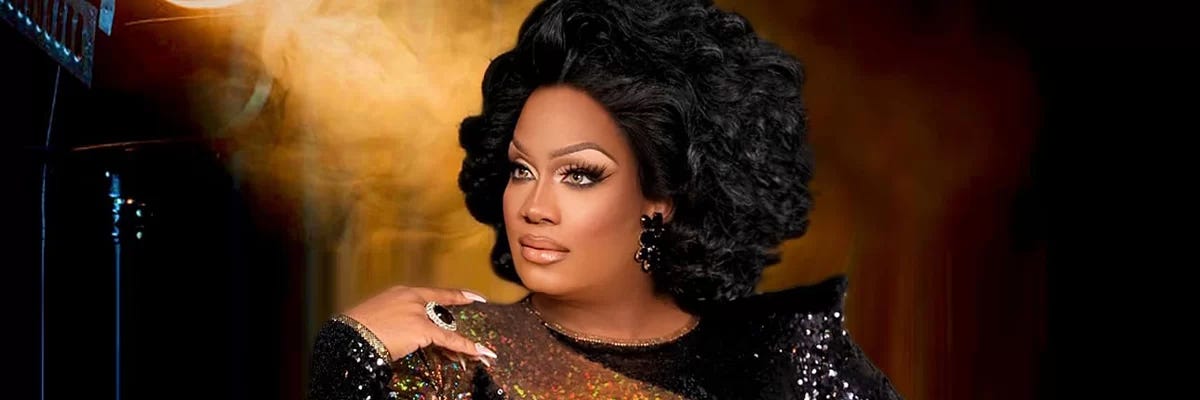
The moment crystallized what’s actually happening here. Equality Ohio condemned the legislation as “censorship” and “a blatant attempt by politicians to suppress cultural expression under the guise of protecting children.” Meanwhile, one of the bill’s 42 co-sponsors was himself accused of sexual misconduct involving a minor relative — allegations a prosecutor called “concerning and suspicious.” Tiffinohio
The First Amendment doesn’t have a dress code. When the state criminalizes gender expression in public space, it’s not protecting children. It’s policing identity.
Title VI vs. the First Amendment
A federal judge in Illinois just drew a clear constitutional line that the current political climate has been trying to erase.
In Canel v. Art Institute of Chicago, Judge Georgia Alexakis dismissed a Title VI hostile environment claim brought by Shiran Canel, a Jewish and Israeli student at the School of the Art Institute of Chicago, who alleged that campus protests and anti-Israel speech following October 7, 2023, created a discriminatory environment. The ruling, covered by First Amendment scholar Eugene Volokh in Reason, is a careful, doctrinally grounded decision — and a crucial one. Title VI of the Civil Rights Act of 1964 is a landmark federal law prohibiting discrimination on the basis of race, color, or national origin in any program or activity receiving federal financial assistance.
The court drew the essential distinction at the heart of campus speech law: the difference between speech on matters of public concern directed to a community at large, and targeted personal harassment of specific individuals. Flyers in hallways, open letters, walkouts, social media posts, and petitions,however offensive their content, fall squarely in the first category. They are constitutionally protected.
The ruling acknowledges genuine discomfort with some of the speech involved. One faculty member’s social media posts were, by any measure, vile. But the court applied the correct standard: the First Amendment “protects the freedom to express the thought that we hate.” The key question isn’t whether speech is offensive — it’s whether it constitutes targeted, personal harassment or interferes with someone’s access to education.
Crucially, the court also rejected the idea that Title VI could be used to demand that a university adopt a particular viewpoint. “Title VI is not a portal for students to litigate their general dissatisfaction with the conduct of administrators.”
This matters right now because the Trump administration has been wielding Title VI as a defunding threat against universities that don’t suppress pro-Palestinian speech, essentially inverting the statute’s purpose. This ruling pushes back. Protected speech is protected speech, even when it’s loud, even when it’s painful, even when powerful actors would prefer silence.
The Price of Watching
Robert Reich shares this story in a recent Substack post: The Wall Street Journal published a bombshell investigation last week by reporter Hannah Critchfield and her team. They analyzed over 200 videos, reviewed more than 100,000 government social media posts, and tracked hundreds of cases through the legal system. What they found should alarm every American who has ever stood on a sidewalk, held up a phone, or simply watched their neighbors being taken away.
Of the 279 people publicly accused by the Trump administration of assaulting ICE and Border Patrol agents, 64 percent are American citizens. Of those 181 citizens, close to half were never charged at all — and not one has been convicted at trial.
This is not a story about immigration enforcement. This is a story about the First Amendment.
Sydney Lori Reid is a 44-year-old veterinary assistant in Washington, D.C. In July, she went to a jail to witness an immigration enforcement action, believing she had a duty to document it. Federal agents grabbed her, pinned her to a wall, handcuffed her, and charged her with felony assault — a charge carrying up to 20 years in federal prison.
The government’s assault allegation rested on scrapes on an agent’s hands — scrapes that occurred in the process of handcuffing Reid. When she was arrested, Reid’s phone dropped, but kept recording. On that recording, you can hear agents debating — in real time — what the assault actually was. First, it was a raised knee. Then an elbow.
The government took her case to a grand jury. The grand jury declined to indict. They tried a second grand jury. Also declined. A third. Also declined. This is almost unheard of — and it revealed both the public’s resistance to charging her on the available evidence, and the government’s determination to bring a case anyway. Prosecutors ultimately charged her with a lesser misdemeanor that didn’t require a grand jury. Reid was acquitted at trial.
The WSJ investigation makes clear this is not rogue behavior by individual agents. Attorney General Pam Bondi, on her first day in office, issued memos directing prosecutors to aggressively pursue any violence against or obstruction of law enforcement. Then-Border Patrol Chief Gregory Bovino gave agents standing orders: “Arrest as many people that touch you as you want to. Those are the general orders all the way to the top.”
Alongside the prosecutions, DHS has used social media to amplify these allegations — posting names, mug shots, and charges before any conviction, with explicit warning messages: don’t be like this person. This Theater of Deterrence is aimed squarely at the public’s willingness to show up, watch, document, and dissent.
The First Amendment protects not just speech but the ecosystem in which speech survives: the right to assemble, to observe government action, to record public officials, and to protest. ICE agents, like all law enforcement, must respect those protections. Crowd-control tactics and arrests cannot be used simply to punish speech or penalize a particular viewpoint.
When the government arrests people for their presence — then publicizes those arrests before conviction — it engages in what First Amendment law calls a chilling effect: the suppression of protected expression not through explicit prohibition, but through fear.
To prove First Amendment retaliation, a person must show they engaged in protected expression, that the government took adverse action against them, and that their protected expression motivated that action. The Wall Street Journal investigation documents this pattern at scale across hundreds of cases as an explicit administration-wide strategy.
Courts are starting to name it. In Los Angeles, a federal court found that federal agents’ “indiscriminate use of force will undoubtedly chill the media’s efforts to cover these public events and protesters seeking to express peacefully their views on national policies.” ACLU of Illinois
In Chicago, attorneys in the “Broadview Six” case — six people facing federal charges for protesting outside an ICE facility — argued that the indictment criminalizes First Amendment rights to speech and assembly and casts a chill on “a broad and diverse social movement engaging in constitutionally protected protest activities.” Chicago Tribune
And the Brennan Center has documented something even more troubling: ICE has signed contracts worth up to $25 million for social media monitoring, facial recognition, and phone location tracking — and the administration openly states it will use these tools not just to find people to deport, but to target those who oppose ICE’s actions. The government is surveilling dissent. It is labeling protesters “domestic terrorists.” It is building lists. Brennan Center for Justice
The Journal’s investigation found that people publicly accused by the federal government — even those later exonerated — are less likely to participate in protests and less likely to put themselves in situations where their names might be tracked.
Sydney Reid put it plainly: “Those are our rights as U.S. citizens and they’re being stifled.”
The Journal’s conclusion is stark: “The Department of Homeland Security, which was created in 2002 to protect Americans, has turned its force against U.S. citizens.” The government is “chilling First Amendment expression” targeting “perceived dissenters, even if video contradicts what agents have initially claimed happened.”
This is the feedback loop the administration is engineering. Arrest enough people on thin or fabricated grounds. Publish their faces before trial. Make them spend money on lawyers, miss work for court dates, absorb death threats from online mobs. Watch the sidewalks empty.
We’ve been watching this pattern develop for months — the tattooed deportations, the detention of journalists, the surveillance of protest movements, the labeling of legal observers as agitators. Each story looks like an isolated incident. The WSJ investigation shows it is a coordinated campaign.
The First Amendment doesn’t just protect your speech. It protects your right to be there to witness, to document, to show up. That right is under direct assault by a government that has learned something important: you don’t have to ban protest to kill it. You just have to make the cost of showing up feel unsurvivable.
We cannot let them make that calculation work.
Making the World Visible
Children’s Television and the Ongoing Fight to Tell the Truth with Love
On November 10, 1969, a Black schoolteacher named Gordon walked a little girl named Sally onto Sesame Street and said: “You’ve never seen a street like Sesame Street. Everything happens here.” Within six months, the Mississippi State Commission for Educational Television voted to remove the show from state airwaves. A whistleblower leaked the reason to the New York Times: certain commissioners objected to its “highly integrated cast of children.” Alabama, Arkansas, Florida, Louisiana, and Tennessee also moved to preempt the show.
Jackson residents of all ages staged a protest in front of Mississippi Public Broadcasting’s headquarters. After 22 days, the ban was reversed. That fall, the cast toured 14 cities. In Jackson, they performed at an event co-sponsored by the same commission that had tried to ban them.
Sesame Street has been doing this for 56 years, but the battles around children’s television have not stopped. SOURCE
The Return of Reading Rainbow
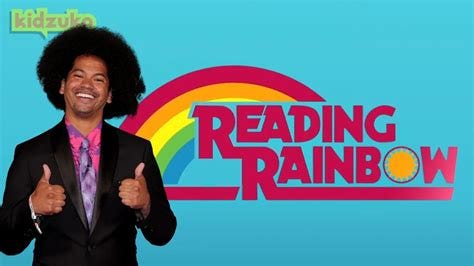
After a nearly two-decade absence, Reading Rainbow returned in fall 2025 with four new episodes on Sony’s KidZuko YouTube channel, hosted by Mychal Threets — a Bay Area librarian and social media creator known for his videos about “library joy.” The four episodes accumulated nearly 5 million views. Sony Pictures Television has since ordered 24 additional episodes. Deadline
Threets grew up as a homeschooled library kid in Fairfield, California, eventually becoming supervising librarian at the same Solano County branch he’d frequented since age three. During the pandemic, he began posting videos about daily life in the library and built a following of over 1.7 million across TikTok and Instagram. One viral video captured an impromptu moment: a child who couldn’t read Spanish, then one who could, joined together to read a story aloud to a third child — a spontaneous circle of readers that earned tens of millions of views. He received the American Library Association’s “I Love My Librarian” award in 2023, selected from over 1,400 nominees nationwide. Today’s Parent
Then came coordinated online harassment. Accounts on X began cross-posting his videos with captions calling him “weird,” implying he had developmental delays, and suggesting he was a danger to children — a “dark energy” around kids. Threets responded publicly, confronting the harassment with empathy and asking his supporters not to retaliate: “Sometimes the best way to respond to people who level insults is with empathy.” Rolling Stone
Threets has been open about living with anxiety, PTSD, depression, and panic disorder. He resigned from his library position in early 2024, later disclosing that he had left intending to end his life, and that being offered the Reading Rainbow hosting role helped him “stay another day.”
Now, alongside his signature celebration of libraries, Threets says he feels an obligation to speak about book bans and the harassment of library workers. His grandparents, he notes, were not allowed to have library cards because of the color of their skin. Publishers Weekly
Ms. Rachel and the Price of Saying “All Children”
Rachel Griffin Accurso — Ms. Rachel — hosts Songs for Littles, a YouTube series teaching toddlers nursery rhymes, phonics, and emotional vocabulary. She has 16 million YouTube subscribers; some of her videos have exceeded 1.5 billion views. She has been widely described as this generation’s Mister Rogers.
Her first round of organized backlash came in 2023, when conservative influencers called for a boycott after she stated that dinosaurs existed millions of years ago and featured a cast member, Jules Hoffman, who uses gender-neutral pronouns. Hoffman never discussed gender identity with children on the show. Accurso (Ms. Rachel) took a mental health break from social media as a result of the backlash.
In May 2024, she launched a fundraiser for children in conflict zones, including Gaza, raising $50,000 for Save the Children. She spoke tearfully in a video about the “bullying” that followed, and issued the statement: “Palestinian children, Israeli children, children in the US — Muslim, Jewish, Christian children — all children, in every country. Not one is excluded." AL-Monitor

Pro-Israel groups, including StopAntisemitism, repeatedly targeted her for sharing content about Palestinian children. In late 2025, the organization nominated her for its “Antisemite of the Year” — a list that has also included Tucker Carlson and Cenk Uygur. Following the nomination, Accurso reported a spike in threats against herself and her family and said she had been forced to hire security. StopAntisemitism also formally requested that the Department of Justice investigate whether her posts constituted paid Hamas propaganda. No evidence of any such arrangement has been presented. Jewish Currents
Democratic Congressman Ro Khanna publicly rejected the antisemitism accusation, stating, “Ms. Rachel is a preschool teacher who speaks up for starving children in Gaza. That is not antisemitism.” Accurso has not stopped. She met with Rahaf, a three-year-old double amputee from Gaza, and posted images of the visit. She told an interviewer: “I think it should be controversial to not say anything.” AL-Monitor
What connects Mississippi 1969 to the harassment of Mychal Threets to the attacks on Ms. Rachel is a consistent pattern: attempts to narrow what children’s media is permitted to show, and who it is permitted to include. The targets change; the mechanism is the same.
Children’s programming has always operated at the intersection of education, culture, and power. Threets frames his own work in explicitly historical terms — his grandparents’ exclusion from public libraries was living memory when Reading Rainbow first aired in 1983. The Sesame Street cast toured the American South in 1969 to audiences who had never seen a television neighborhood that looked like theirs. Publishers Weekly
The Law Is in Motion
The legal front on children’s access to books and stories is as active as it has ever been, and the outcomes are mixed. Courts have repeatedly affirmed that the First Amendment limits the government’s power to remove books from libraries based solely on content or viewpoint. In Little v. Llano County (2024), the Fifth Circuit initially upheld a preliminary injunction requiring a Texas public library to restore books removed at the direction of county officials — titles ranging from histories of the Ku Klux Klan to young adult novels featuring LGBTQ characters — finding that county officials had likely violated the First Amendment by removing the books based on their contents and messages.
The Supreme Court declined to hear the case in December 2025, however, leaving in place the Fifth Circuit’s en banc reversal and allowing state and local governments broader authority to remove books from public library shelves. PEN America, which recorded nearly 7,000 instances of banned books in the 2024-25 school year across 23 states and 87 school districts, called the Supreme Court’s inaction a signal that “state and local governments” may now “exert ideological control over the people with impunity.” On the other side of the ledger, a federal judge in Florida ruled in 2025 in Penguin Random House v. Gibson that withdrawing materials from public school libraries abridges First Amendment rights, finding that “the removal of library books without consideration of their overall value cannot be expressive activity amounting to government speech.” Publishers Weekly
The sharpest current legal tension involves not removal but access — specifically, which children get to encounter which stories. In Mahmoud v. Taylor, decided by the Supreme Court 6-3 in June 2025, the Court held that a Maryland school district violated parents’ First Amendment free exercise rights (The First Amendment’s Free Exercise Clause forbids Congress from prohibiting the free exercise of religion.) by requiring elementary school students to be present for read-alouds of LGBTQ-inclusive storybooks without offering an opt-out. Wikipedia
Justice Sotomayor’s dissent warned that the majority’s reasoning placed no meaningful limits on what school decisions could be subject to strict scrutiny, potentially extending to lessons on women’s rights, science, history, or any classroom moment that conflicts with a family’s stated religious beliefs. PEN America has documented that books by and about LGBTQ people and books about race and racism comprise the overwhelming majority of targeted titles. GLAAD
The question these cases circle — whether every child has a First Amendment interest in encountering the full range of human experience in the books available to them — remains, for now, unresolved. That work continues. So does the resistance to it.
A Librarian’s Stand
On March 16, the Rutherford County Library System board in Tennessee voted 8-3 to relocate over 190 books — primarily LGBTQIA+ children’s titles — to the adult section, and to sever ties with the American Library Association. The board framed it as an age-appropriateness measure. The review traces back to directives from Tennessee Secretary of State Tre Hargett, who ordered libraries statewide to conduct an “immediate age-appropriateness review” of children’s materials.
On March 18, RCLS Director Luanne James sent the board a letter stating that she wasn’t going to comply.
“Restricting access to these materials through subjective relocation or removal constitutes a violation of the community’s right to information and a direct infringement on the principles of free speech,” she wrote, calling the board’s vote “a clear act of viewpoint discrimination.” She argued that the relocation bypassed the library’s established reconsideration policy and that a government institution cannot legally restrict access based on the viewpoint expressed in materials.
Board Chair Cody York called it insubordination. York has scheduled a special meeting for March 30 and said he believes the matter “warrants serious disciplinary consideration, up to and including termination.”
The First Amendment framing here is precise, not rhetorical. Moving books because they depict LGBTQ+ people isn’t content-neutral — it’s viewpoint discrimination, which is exactly what the First Amendment prohibits. Local advocate Keri Lambert says: “This is about eliminating the acknowledgment that LGBTQ+ people exist.”
James has 25 years of public service, including directorships in South Carolina and Texas. She may lose her job for refusing to carry out an unconstitutional order. That’s precisely the kind of official pressure on free expression that the First Amendment was designed to prevent — and the kind of courage it depends on to mean anything. The Advocate

A Free Press Is Not a Security Risk
Last fall, the Department of Defense rolled out a press credentialing policy that amounted to a loyalty test. Reporters were required to sign a document advising them that their Pentagon access could be revoked if they were “reasonably determined to pose a security or safety risk” — including for accessing or disclosing information deemed “sensitive,” even if unclassified. Most major news organizations — CBS, ABC, NBC, CNN, and Fox News among them — declined to sign and stopped working out of the Pentagon on a daily basis. The press corps that remained was, as one judge would later note, comprised mostly of conservative outlets that had agreed to the policy. The New York Times sued in December. On Friday, March 20th, they won their case. PBS
U.S. District Judge Paul Friedman issued a sweeping 40-page ruling blocking the policy on First and Fifth Amendment grounds. The problem wasn’t just what the policy said — it was what it was designed to do. The judge found that “undisputed evidence” showed the policy’s true purpose was to weed out “disfavored journalists” and replace them with those “on board and willing to serve” the government — a clear instance of illegal viewpoint discrimination. He noted that Defense Secretary Pete Hegseth had used a “waving-hand emoji” on X in response to Times journalists refusing to sign, which hardly is the posture of neutral administration. Al Jazeera
The vagueness was also its own constitutional problem. The policy’s imprecise language could penalize routine journalistic practices, creating uncertainty that might lead journalists to self-censor to avoid losing credentials. Friedman ordered the Pentagon to reinstate press credentials for seven Times journalists and gave the department one week to file a compliance report.
The ruling lands while the U.S. is conducting military operations in Venezuela and fighting a war with Iran — precisely the moment when independent Pentagon reporting matters most. The judge said as much. A government that controls which journalists can ask questions isn’t holding press briefings. It’s producing press releases.
Acknowledgement
We are always grateful for the encouragement and suggestions of our colleagues and peers.
NEXT STEPS: TAKE ACTION
First Amendment Friday
F.A.C.T. invites all cultural institutions, artists, and activists to post First Amendment stories, graphics, calls to action, and advice to their audience every Friday. Join our campaign by signing up here. Feel free to use our digital assets here.
Public Practice
We are asking cultural venues in New York City (and across the USA) to prominently place our First Amendment poster in their public areas. Sign up to get your copy. We are also asking performance venues to share our curtain speech (or create your own).