
First Amendment Friday
March 20, 2026
Section 702, Free Expression, and the Criminalization of Dissent
Under Section 702 of the Foreign Intelligence Surveillance Act (FISA), the government engages in mass, warrantless surveillance of Americans’ phone calls, texts, emails, and other electronic communications. Information collected without a warrant can be used to prosecute people, even for crimes unrelated to national security. The First Amendment concern here is structural: it’s not just that protected speech is being read — it’s that the surveillance apparatus itself creates a chilling effect on assembly, association, and expression. Project on Government Oversight (POGO)
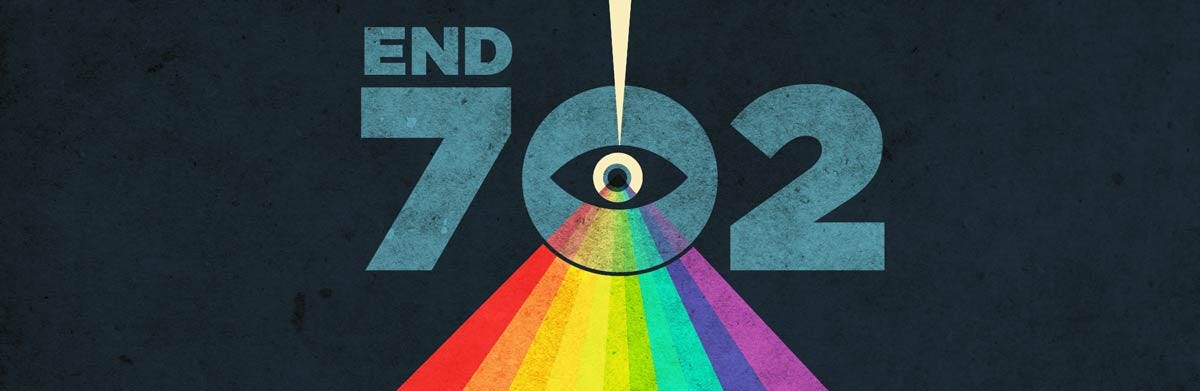
702 was ostensibly designed to target foreign nationals abroad. But when those foreigners communicate with Americans, Americans’ messages get collected too. The FBI then searches this database using Americans’ names, phone numbers, and email addresses — without warrants. These “backdoor searches” have been documented extensively. Stateofsurveillance
The FBI has conducted millions of warrantless searches of Section 702-acquired information to access communications of Black Lives Matter protestors, U.S. government officials, journalists, political commentators, and 19,000 donors to a single congressional campaign. That last detail — 19,000 donors — is striking because it implicates First Amendment associational rights directly. Donating to a political campaign is a protected form of expression.Brennan Center for Justice
Separate from but intertwined with 702 is what reformers call the “data broker loophole.” Data brokers who buy and sell personal data collected from smartphone applications can sell sensitive information, including a phone’s geolocation, to law enforcement and intelligence agencies — meaning police can buy the data they would otherwise need a warrant to get. Electronic Frontier Foundation
Examples of such purchases include the Department of Defense purchasing location data collected from prayer apps to monitor Muslim communities, and police departments purchasing information to track racial justice protesters. Online posts, location data, and protest activity are being aggregated into dossiers on Americans exercising First Amendment rights. ICE has been using this data to track U.S. citizens exercising their First Amendment right to protest.
The government contracts with Palantir to build software that combines surveillance data, government records, and commercial data — creating comprehensive dossiers on Americans without warrants. DOGE is now collecting data from Social Security, Treasury, OPM, HHS, VA, and other agencies into a centralized database. Section 702 data could flow right into it. This is the emerging frontier: the merger of foreign intelligence collection infrastructure with domestic data aggregation at a scale that didn’t exist when FISA was first written.
Oversite has been gutted; Trump fired the Democratic board members of the Privacy and Civil Liberties Oversight Board (PCLOB) — the only independent agency within the government charged with ensuring protection of Americans’ civil liberties — almost immediately after taking office. The board now has one part-time member and lacks a quorum to begin new investigations or issue reports. At exactly the moment when the reauthorization debate is heating up, the independent watchdog is effectively disabled.
Here is What’s Happening Right Now in Congress
Section 702 will sunset on April 20, 2026, absent further reauthorization. Congress has a few weeks to debate and decide whether this warrantless surveillance of Americans continues. The Trump White House wants a clean extension — no reforms, status quo preserved.
Senators Mike Lee (R-UT) and Dick Durbin (D-IL) introduced the bipartisan SAFE Act (not the SAVE Act), which would reauthorize Section 702 while requiring a warrant before accessing the content of Americans’ communications, closing the data broker loophole, and fixing the overbroad ECSP definition that currently could compel almost any business or nonprofit with email to cooperate with government surveillance. Mike Lee
The warrant requirement failed by literally one vote last cycle — an amendment to close the backdoor search loophole failed in the House 212-212.
A more comprehensive bill, The Government Surveillance Reform Act (Wyden/Lee) is also in play: it reauthorizes Section 702 for four years with a warrant requirement, bans government purchase of Americans’ data from data brokers without a warrant, prohibits reverse targeting, and repeals the controversial 2024 RISAA expansion that allows the government to force millions of Americans and companies to secretly spy on its behalf. U.S. Senator Ron Wyden
Congressional investigations by the Church and Pike Committees revealed in 1976 that the FBI, CIA, and NSA had illegally spied on civil rights and anti-war advocates for decades based on tenuous claims of Soviet influence. Most notoriously, the FBI spied on and attempted to blackmail the Rev. Martin Luther King Jr. The current moment explicitly invokes that history.
Eid Mubarak — And a Reminder the Founders Were Clear
To the millions of American Muslims celebrating Eid al-Fitr today, marking the end of Ramadan with prayer, charity, and the company of people you love, Eid Mubarak.
This year, the celebration arrives under conditions that demand we say something plainly. For many decades, American Muslims have been subjected to warrantless surveillance, their mosques monitored, their communications swept up in intelligence dragnets, and their prayer app location data sold to federal agencies without warrants. CAIR documented 8,683 complaints of anti-Muslim discrimination in 2025 alone — a record high. Members of Congress have posted that “Muslims don’t belong in American society” with no meaningful censure from leadership.
CAIR and other organizations work tirelessly to bring this into public consciousness. But awareness isn’t enough. Anti-Muslim bigotry needs to be named, refused, and politically costly — the way antisemitism is — not managed quietly as a minority concern.
As I wrote last week, the founders were explicit about this. Thomas Jefferson, writing about his Virginia Statute for Religious Freedom (one of only three accomplishments he asked to be carved on his tombstone), celebrated that its protections were written “to comprehend, within the mantle of its protection, the Jew and the Gentile, the Christian and the Muslim, the Hindu, and infidel of every denomination.” The founders used Muslims as the explicit test case for whether American pluralism was real.
Two hundred and thirty years later, that test is still running. As Congress decides whether to renew a surveillance law documented to target Muslim communities without warrants, American Muslims gather in public squares for Eid prayer — the most fundamental First Amendment act there is.

When Artists Are the Target
ARC (Artists at Risk Connection) tracks what happens to cultural workers when governments decide dissent is dangerous. ARC has just published a memorial for more than 25 Iranian artists confirmed killed during the regime’s crackdown on protesters. They receive an average of fifteen urgent requests for protection every week. Each one represents an artist whose work the state found threatening enough to act against. Launching an illegal war against the regime that killed those artists was not the answer.
ARC’s National Artist Safety Survey of 1,500 U.S.-based artists found that 87% reported increased threats to artistic freedom in the past year. That’s here in the country whose First Amendment provides the most robust free expression protections in the world, on paper.
The First Amendment doesn’t only protect speech. It protects the conditions that make speech possible — the funding infrastructure, the associational networks, the freedom from surveillance and immigration consequences that allow artists to work without calculating the cost of what they say.
When NEH grants are cancelled by executive fiat, when the IRS threatens universities that platform disfavored speakers, when immigration enforcement targets students for political expression on campus, the harm isn’t only to the individuals directly affected. It’s to everyone whose creative work becomes more cautious in response. Courts call this the chilling effect. It doesn’t require a prosecution to be real.
ARC’s global framework makes something visible that domestic coverage tends to obscure: artists are not incidental casualties of political repression. They are primary targets, because their testimony, witnessing, and creativity are a profound form of power, because their imagination of alternatives threatens authoritarians.
Government Weaponizes Prejudice
In December, Florida Governor Ron DeSantis signed an executive order designating CAIR — the Council on American-Islamic Relations, one of the largest Muslim civil rights organizations in America — a “foreign terrorist organization.” The order directed every Florida agency to deny contracts, employment, funds, and benefits to CAIR and anyone providing it “material support.” Almost immediately, a Florida production company withdrew from a podcast agreement with CAIR. A Muslim federation disinvited CAIR from a conference. The chilling effect was immediate.
On March 4th, U.S. District Judge Mark Walker blocked the order. In his ruling, Walker wrote: “Once again, Florida chooses political posturing over the First Amendment.” He found that the governor’s decree coerced third parties to disassociate from CAIR — closing avenues of expression and suppressing protected speech. The doctrine he applied recalled the Supreme Court Vullo decision: government cannot do indirectly what it is barred from doing directly. You cannot suppress speech by threatening everyone who platforms it. Religion News
Meanwhile in Texas, Governor Abbott and AG Ken Paxton have effectively excluded Muslim families from the state’s education voucher program — $10,000 per child in annual tuition assistance — available to parents at religiously affiliated private schools, so long as those schools are not Islamic. A parent of two children at an Islamic private school north of Houston has now sued Paxton in federal court on constitutional grounds. Courthouse News Service
The pattern is deliberate and the doctrine is clear: when government withholds public benefits based on religious identity or political viewpoint, it violates both the Free Exercise Clause and the First Amendment’s prohibition on viewpoint discrimination. As the Courthouse News columnist noted, barring Jews from practically everything was one of the first things Hitler did when he took power. Florida and Texas aren’t burning books yet — but they are designating civil rights lawyers as terrorists and denying Muslim children the same educational benefits given to Christian children. The phrase “Nazi Lite” is apt. Courthouse News Service
NYU Pays to Book Approved Artists
NYU’s student Program Board is speaking out: administrators barred them from booking artists affiliated with No Music For Genocide — a coalition of over 1,000 musicians and labels who have blocked their music from being played in Israel — for the university’s biggest annual concert, V100.
When students said they might not be able to move forward with the event under those restrictions, administrators immediately offered an additional $30,000 in funding.
Program Board President Josef Dunlap says the school never gave a clear reason for the ban. “It was always very vague — like, ‘to make sure they don’t have a past that would harm NYU’s reputation.’” Artists that were off the table included Blood Orange, Fontaines D.C., and Faye Webster. The concert ultimately featured Atlanta rapper JID and electronic duo The Hellp, and cost upward of $200,000.
The university says it was simply following “longstanding policy,” and one Student Government Association leader suggested Executive Order No. 157 — a 2016 New York directive barring state entities from funding BDS-affiliated initiatives — may have legally obligated the restrictions.
But students see a pattern. The 2024 V100 featured artists who publicly criticized NYU’s ties to Israel. Two months later, the university canceled the Program Board’s Strawberry Festival — on the day of the event, hours after authorizing arrests at a pro-Palestinian encampment on campus. NYU also canceled 13 affinity graduations before walking that back after student pushback.
The Program Board’s statement closed with a pointed line: “NYU cannot promote diversity, belonging and community while rolling back the structures that make those values real.” SOURCE
Grammarly has an Identity Problem
Last week, Grammarly’s parent company Superhuman quietly launched an “Expert Review” feature — a paid add-on that promised users editing feedback styled after real, named journalists and writers. For $12 a month, you could get a critique framed as coming from investigative journalist Julia Angwin, or novelist Stephen King, or tech journalist Kara Swisher. None of these figures had been consulted about their inclusion. PRF Law
The backlash was swift. Casey Newton, founder of the newsletter Platformer, fed one of his own articles into the tool and received feedback from Grammarly’s approximation of Kara Swisher — suggestions so generic they raised the question of why the company would bother using real names at all. He forwarded the output to the actual Swisher, who was not amused. The feature was pulled. And on the same day it came down, a class-action lawsuit landed in the Southern District of New York.TechCrunch
The suit alleges Grammarly violated New York and California laws requiring a person’s consent before using their name for commercial purposes. The complaint specifically invokes California’s right of publicity statute, which bars commercial use of a person’s name or likeness without prior consent. Angwin, who described the experience as a form of digital cloning, is the only named plaintiff so far, but the class is described broadly — potentially hundreds of writers and journalists. FilmoGaz
The Grammarly story is being framed primarily as a right-of-publicity case — consent, commercial use, the unauthorized harvesting of a journalist’s professional identity to sell a subscription product. That framing is legally correct. But it undersells the deeper First Amendment stakes.
What Grammarly’s “Expert Review” feature actually commercialized wasn’t just a name or a likeness — it was a voice. Angwin, Swisher, King: these are figures whose authority derives from decades of cultivated perspective, editorial judgment, and the public trust built through independent work. Attaching their names to algorithmically generated generic feedback isn’t just appropriation — it’s a form of ventriloquism that degrades the very thing it claims to offer. When Casey Newton fed his own article into the tool and received back a simulation of Swisher that Swisher herself found unrecognizable, the product wasn’t just useless. It was corrosive — a commercial counterfeit of critical voice.
This matters for press freedom in a specific way. Journalism’s authority rests on the public’s ability to distinguish one voice from another — to know that Kara Swisher’s or Julia Angwin’s analysis carries the weight of her actual investigative practice, and that attaching her name to something means she actually said it. Tools that simulate named journalists as interchangeable style filters erode that distinction at scale. They normalize the idea that a byline is a brand rather than a guarantee of individual accountability. At a moment when the press is already navigating AI-generated misinformation, synthetic quotes, and deepfake video, the casual commercial simulation of real journalists’ critical voices isn’t a minor IP dispute. The lawsuit will likely settle. The feature is already gone. But the logic that produced it hasn’t.
When the Story Gets Cut: Pixar, Self-Censorship, and the First Amendment We Don’t Talk About
Pete Docter’s comment this week — “We’re making a movie, not hundreds of millions of dollars of therapy” Variety— was offered as an explanation for why Pixar removed LGBTQ+ content from Elio, its 2025 box office flop. As a business rationale, it’s at least honest. As a statement about storytelling, it’s worth unpacking — because it reveals something important about the kind of speech that never makes it to court but shapes the cultural landscape just as surely as any government decree.
The First Amendment protects against government censorship. Pixar is a private company; Disney is its parent. No constitutional violation here. But the FACT frame is about the culture of free expression — and corporate self-censorship driven by political pressure is part of that story.
Elio originally featured a storyline reflecting director Adrian Molina’s own experience growing up gay, including a scene where the lead character imagines raising a child with his male crush. Deadline After poor test screenings and pressure from above, the character was “masculinized,” Molina was replaced, and the queer content was excised. This followed Disney’s earlier capitulation to Florida’s “Don’t Say Gay” legislation — and a similar removal of a transgender character from the Pixar animated series Win or Lose. NewsBytes
What Pixar employees wrote in 2022 still stands as the most direct account of the dynamic: “Nearly every moment of overtly gay affection is cut at Disney’s behest.” That’s not the market speaking — that’s a corporate parent responding to legislative and political pressure and then calling it audience research.
The therapy framing is particularly telling. It implies that depicting a gay child’s ordinary inner life — not activism, not didacticism, just a kid imagining his future — is some kind of clinical intervention requiring parental consent. By that logic, every Pixar film about loss, longing, grief, or the fear of being forgotten is also therapy. Up is therapy. Inside Outis therapy. The difference, apparently, is whose interiority counts as universal.
A former Pixar staffer put it simply: “The Elio that is in theaters right now is far worse than Adrian’s best version of the original.” World of Reel The film bombed anyway.
The First Amendment principle at stake isn’t legal — it’s cultural. A healthy expressive ecosystem requires that storytellers, including those working within corporate structures, have room to tell personal truths. When market pressure and political climate conspire to make certain lives invisible in children’s media, the chilling effect is real, even if no law was broken.
What Stories Tell Us About Democracy
Several FACT members attended a recent online presentation hosted by the Committee for the First Amendment about the value of storytelling to protect our rights.
Seventy percent of Americans can’t pass a basic civic literacy quiz. Only 59% received formal civic education in school. And roughly 42% now actively avoid the news. These aren’t just educational failures — they’re signals that the formal channels of democratic communication have lost much of their audience.
This raises a First Amendment question we don’t ask often enough: if protected speech is the lifeblood of democracy, what happens when people have tuned out the conversation entirely?
That’s the animating concern behind Imagining 2076, a multi-phase research initiative from Democracy 2076 and Harmony Labs. The core question is straightforward: how can the stories we tell about democracy and the future empower Americans to reimagine it for the next generation? The answer they’ve arrived at points squarely at Hollywood.
The researchers coded 2,000 of the most popular shows and films for relevance to democracy and authoritarianism. One finding stood out: on any given day, 58% of the scripted streaming that people watch is government-relevant. People’s views on government and democracy are shaped by Netflix, HBO, and Prime Video, not civics class or the news. There has been a measurable increase in depictions of authoritarian tactics in portrayals of government — Scandal, House of Cards, Veep — and a corresponding decrease in portrayals of representative, responsive, and effective government, like The West Wing. Shorthandstories
For the 42% of Americans who actively avoid political news, entertainment media is their civic education. Shows like Scandal, where election rigging and government corruption are normalized across six seasons, created a mental framework that made false claims about voting machines feel plausible to millions.
Phase 1 of the research (released January 2025) established the landscape. Phase 2 went further. The team created 30+ original storylines, each tailored to an audience’s preferred hero journey, running more than 20 tests with over 10,000 people through randomized controlled trials to understand which story elements most reliably affected beliefs about democracy, sense of agency, and the ability to imagine a better future. Harmony Labs
What they found complicates the usual assumptions about audiences and politics. Democracy stories aren’t boring or one-note; they look different for every audience, who hold distinct and different values. They determined that the stories that work need to focus on people’s values, not their politics. Their analysis mapped four hero archetypes — the insider-transformer, the outsider-transformer, the insider-restorer, the outsider-restorer — each corresponding to different visions of how systemic change happens and who gets to make it.
Their recommendations for storytellers: start with a broken system that needs fixing; show ordinary people exercising power; offer a positive vision of the future. Not utopia. What Democracy 2076 calls “pro-topian” futures — strategies to inspire renewed faith in democracy that move people to action. Near-future imaginings grounded enough to feel achievable.
The project doesn’t advocate for propaganda. It advocates for awareness — helping writers, showrunners, and content creators understand that the stories they tell function as an invisible civic curriculum, whether or not anyone intends it that way.
If we think about the First Amendment as infrastructure, free expression isn’t just a legal protection — it’s the architecture through which democratic culture either flourishes or atrophies. The Democracy 2076 / Harmony Labs research makes vivid what that means in practice: that the health of self-governance depends not only on what speech is legally permitted, but on whether the culture that carries democratic meaning is actually reaching people — and whether what it’s carrying makes them feel like actors in the story, or spectators waiting for it to end.
Police vs. Lemon Pound Cake
In August 2022, heavily armed Adams County, Ohio sheriff’s deputies raided the home of rapper Joseph Foreman — known as Afroman — acting on a tip from a confidential informant. They found nothing. No drugs, no charges. They left, but not before causing significant damage: a broken gate, a broken front door, and, according to Foreman, $400 missing from the cash they seized and later returned.
Foreman did what any artist might do: he made music about it. His video for “Lemon Pound Cake” used his own home security footage of the raid and went viral, with over 3 million YouTube views. He put deputies’ faces on merch. He turned their failed raid into a cultural moment.
Seven deputies responded by suing him for defamation and invasion of privacy, collectively seeking nearly $4 million in damages. They claimed the videos caused emotional distress, public ridicule, and even death threats. They also sought to bar him from using their likenesses in future work.
The ACLU filed an amicus brief calling it a classic SLAPP suit — strategic litigation designed to silence criticism of public officials. After the judge dismissed several claims before trial, the remaining ones went to a jury this week.
After just hours of deliberation on Wednesday, the jury sided entirely with Afroman, clearing him of all liability. “In all circumstances, the jury finds in favor of the defendant,” said Judge Jonathan Hein. “No plaintiff verdict prevailed.”
Outside the courthouse, Foreman put it simply: “I didn’t win. America won. America still has freedom of speech. It’s still for the people, by the people.”
His politics aside (he is alleged to be a MAGA Trump supporter), the case was never really about one rapper and one raid. It was about whether citizens — especially artists — can use their own cameras, their own platforms, and their own voices to criticize law enforcement without being dragged into years of costly litigation for doing it. This week, a jury answered that question clearly. SOURCE
Acknowledgement
We are always grateful for the encouragement and suggestions of our colleagues and peers.
NEXT STEPS: TAKE ACTION
First Amendment Friday
F.A.C.T. invites all cultural institutions, artists, and activists to post First Amendment stories, graphics, calls to action, and advice to their audience every Friday. Join our campaign by signing up here. Feel free to use our digital assets here.
Public Practice
We are asking cultural venues in New York City (and across the USA) to prominently place our First Amendment poster in their public areas. Sign up to get your copy. We are also asking performance venues to share our curtain speech (or create your own).
 | A guest post by
|